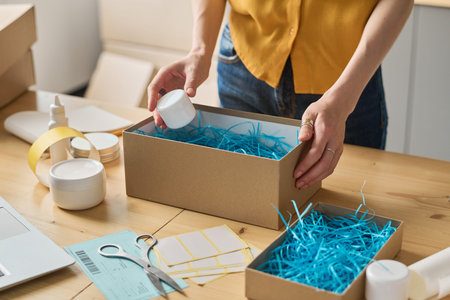

You want orders leaving the building the same day they arrive, with the right items in every box and a tracking number the customer can use. Pick and pack services are the part of fulfillment most brands buy without ever watching it run, which is how a company ends up paying for a process nobody can describe. Here is what happens between a customer clicking buy and a carrier scanning the label, step by step, the way AWD runs it in its fulfillment and logistics operation.
Step 1: The Order Arrives and Gets Screened
An order hits the warehouse system within minutes of being placed. Before anyone touches a shelf, it is checked against available inventory, flagged if an item is short, and grouped with other orders heading to the same carrier.
This screening is where good pick and pack services catch problems while they are still cheap to fix. AWD holds a short order and calls rather than shipping a partial box that becomes a support ticket.
Step 2: The Picker Gets a Route, Not a List
A printed list sends someone walking the building at random. A route sequences the pick by location so the cart moves one direction and touches each aisle once.
Routing does several things at once:
- Cuts the walking time that makes up most of the labor cost in a pick
- Reduces the repetitive lifting behind the hazards that come with high-volume manual handling
- Keeps heavier items low and late in the route so nothing gets crushed
AWD sequences picks by zone and velocity, which is why a fast-moving SKU sits near the pack line and not in the back corner.
Step 3: Every Item Is Scanned Against the Order
Scanning is the difference between a system that thinks it shipped correctly and one that knows. Each unit is read and matched to the line item before it enters the tote.
That read depends on the unique product identifier encoded in the barcode, which is why AWD asks brands to confirm their item numbers during onboarding. A missing or duplicated code is a common reason a warehouse ships the wrong thing.
Step 4: What Pick and Pack Services Do at the Packing Bench
Packing is not putting things in a box. It is choosing the right box, protecting the contents, and including whatever the brand promised would be inside.
At the bench, that means:
- Right-sizing the carton so the brand is not paying dimensional weight on air
- Adding protection appropriate to the item, not a fistful of filler
- Inserting the packing slip, returns label, and any branded card or sample
- Bundling multi-item orders so they arrive as one shipment, not three
American Western Distribution builds these rules per client, so the pick and pack services a brand buys reflect its own packaging standard rather than a warehouse default.
Step 5: Label, Manifest, and the Carrier Cutoff
A packed box that misses the truck is a next-day shipment no matter what the confirmation email said. The last hour of the day is where a same-day promise is kept or broken.
Handle it in this order:
- Rate-shop the shipment against the brand’s carrier accounts
- Print and apply the label, then verify the scan reads clean
- Manifest the box to the outbound trailer before the cutoff
- Push tracking back to the store platform the same day
AWD works backward from each carrier’s cutoff at its Phoenix facility, which is what lets a brand put a same-day promise on its own site.
Step 6: What Gets Measured After the Truck Leaves
Any warehouse will say it is accurate. Ask for the numbers, and how often they are reported.
| Metric | What it tells you | Ask for it |
|---|---|---|
| Order accuracy | Wrong items shipped per hundred orders | Monthly |
| Same-day ship rate | Orders out the door on the day received | Weekly |
| Inventory variance | Gap between system count and shelf count | Per cycle count |
Real pick and pack services report against these rather than describing the process in adjectives, which is how AWD does it.
If you are picking and packing in a spare room and the volume has stopped being fun, look at pick and pack services rather than another set of shelves. Get a quote from AWD and ask what accuracy and same-day rates look like on accounts our size. Handled well, orders leave daily, customers stop emailing, and you spend your week on product. Handled badly, you eat return shipping on every mis-pick and train a new packer every quarter.